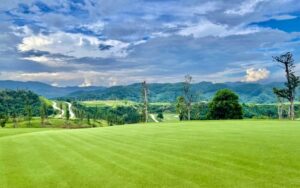
Sapa is not a conventional golf destination in Vietnam. It does not have the same course density as Hanoi, Ho Chi Minh City, or Da Nang, and it probably never will. What it has instead is altitude, scenery, and a completely different kind of round. At over 1,500 metres above sea level in Lao Cai Province, Sapa sits near the Chinese border in Vietnam’s northwest highlands, and playing golf here feels more like a mountain retreat than a standard Vietnam golf trip.
The appeal is the setting. You get cool air most of the year, morning mist that sits low in the valleys, and views across terraced rice fields toward the Hoang Lien Son range, which includes Fansipan, often called the roof of Indochina. For golfers building a Vietnam itinerary who already have beach golf in Da Nang or resort golf in Ha Long on the list, Sapa offers something the coastal destinations simply cannot: elevation, climate contrast, and a hill tribe cultural backdrop that you will not find on a seaside course.
Best Golf Courses in Sapa
At the time of writing, Sapa has one operating golf course, which keeps planning simple. Your Sapa golf decision is not which course to play but whether the destination fits into your wider itinerary at all. For most travelers who make the drive up from Hanoi, the answer is yes, because the course itself is genuinely different from anything else on the Vietnam golf map.
- Sapa Grand Golf Course
Sapa Grand Golf Course, also referred to as Lao Cai Golf Course, is located in Bat Xat near the Chinese border. According to GolfLux course information, the course was developed by Sun Group and designed by IMG, an international golf course design firm. It opened in 2022 as the province’s first publicly accessible course. The layout is an 18 hole par 71 measuring 6,656 yards from the tips, with a slope rating of 73.9 and five sets of tees per hole to accommodate different skill levels.
What makes this course stand out is the terrain. The designers worked with a tight hillside site, so some holes sit in valleys while others run along narrow ridges with long drops on either side. Six holes, from the twelfth through the seventeenth, are interrupted by lakes, streams, and waterfalls that cut through the bottom of the property. From several holes you can see the Red River in the distance, which forms part of the Vietnam and China border. Elevation changes are significant, and the greens and fairways use platinum paspalum grass. It is not a forgiving course if you stray, errant shots tend to find native grasses, shrubs, and the rocky outcrops that interrupt the fairway soil.
This course suits golfers who want a memorable round rather than a scoring round. It works especially well for travelers on a multi-day Sapa trip where golf is one of several experiences, not the entire purpose of the visit. Couples where one person plays and the other prefers trekking or market visits will find the pacing comfortable, since the course is close enough to town that you can combine 18 holes with a full afternoon of sightseeing.
Which course should you play?
With a single course in the destination, the real question is whether Sapa Grand fits your travel style. If you want a challenging mountain round with dramatic elevation changes and you are already heading to the northwest highlands, it is the obvious choice. If you want multiple rounds across different layouts on a short trip, you are better off basing yourself in Hanoi or Ha Long and treating Sapa as an add on rather than a golf base. The right mindset here is one standout round inside a scenic mountain holiday, not a golf circuit.
Best Time To Play Golf In Sapa
Golf timing in Sapa lines up closely with general tourism seasons, though the altitude changes the equation compared to the rest of Vietnam. Vietnam’s official tourism information describes Sapa as cool year round, with distinct wet and dry periods that affect both visibility and comfort on course.
March to May. This is one of the two best windows for a Sapa golf trip. Temperatures are mild, flowers bloom across the terraces, and the skies tend to be clearer than in summer. Mornings can still be misty at altitude, but visibility usually improves by late morning. It is also a strong period for trekking and village visits, which makes it ideal for mixed itineraries.
September to November. The other prime season. Rice harvest colors the terraces gold, the air is crisp, and rainfall drops significantly after the summer monsoon. For golf, this often means the most stable conditions of the year. Tee times in the morning work well, and afternoons remain comfortable without the heat you get in lowland Vietnam.
December to February. Winter in Sapa is cold by Vietnam standards, sometimes close to freezing in the early mornings, with heavy mist and occasional frost at the higher elevations. Golf is still possible on clearer days, but you should expect delayed morning starts and reduced visibility. This season suits travelers who are happy with cool weather golf and want to combine the round with winter mountain scenery, but it is not the ideal window if clear views matter to you.
June to August. The summer monsoon brings the most rainfall. Temperatures stay cooler than in lowland Vietnam thanks to the altitude, but afternoon thunderstorms are common. Morning tee times and flexible scheduling are important. Book with a backup plan in mind, and avoid building a trip where a single missed round ruins the itinerary.
Sapa Golf Holidays & Package Tours
Sapa works best as part of a longer northern Vietnam golf holiday rather than a standalone two day trip, mostly because the drive from Hanoi is 5 to 6 hours each way. Most travelers combine it with Hanoi, and often with Ha Long or an overnight onsen resort on the route.
A typical Sapa golf package includes hotel accommodation in town, private transfers from Hanoi or Lao Cai station, the tee time at Sapa Grand, caddie and cart, and at least one non-golf activity such as a Fansipan cable car trip, a Muong Hoa valley trek, or a village visit. Because the destination is built around mountain travel rather than resort golf, packages lean toward experience-led itineraries.
For a fuller list of route options in the region, the Vietnam Golf Holidays is useful starting points when building a custom itinerary that includes Sapa.
Sapa suits couples and mixed interest groups particularly well. One person can play while the other joins a village walk, a market visit, or a spa session at one of the mountain hotels, and you meet back in town for dinner.
Golf with Highland Mountain Travel in Sapa
This is where Sapa stops being a generic golf destination and becomes something specific. Very few golf trips in Southeast Asia put you at 1,500 metres with hill tribe villages, terraced rice fields, and a 3,143 metre peak on the horizon. Fansipan is promoted by Vietnam’s tourism authorities as the roof of Indochina, and the cable car from Sapa town makes it accessible on a half day.
A practical itinerary is to arrive from Hanoi by road or overnight train to Lao Cai, spend a day acclimatizing and exploring Sapa town and Cat Cat village, play Sapa Grand on day two, and dedicate day three to Fansipan or a Muong Hoa valley trek before heading back. Another approach is to flip the order and finish with the round, which often gives you better weather visibility as the mist burns off over three or four days.
Unlike Ha Long, where golf and cruising are the obvious pairing, Sapa is about golf combined with slower highland travel: trekking, village homestays, markets, and local food. The round is a single highlight rather than a daily activity.
Book Tee Times in Sapa
Booking Sapa golf is best handled together with accommodation, transfers, and your wider itinerary, especially for international travelers arriving through Hanoi. Because there is only one course, tee availability can be tight on weekends and during peak autumn months, so early booking matters more than in larger Vietnam golf destinations.
When booking, it is worth confirming:
- Your preferred date and tee time
- Morning versus afternoon preference, with morning often safer for visibility
- Club rental if you are not bringing your own set
- Transfer arrangements from Hanoi, Lao Cai station, or your Sapa hotel
- How the round fits around trekking, cable car visits, or village tours
- A weather contingency, particularly in summer and deep winter
A practical tip: leave a buffer day between travel and golf. The drive up from Hanoi is long, and arriving on the same morning as your tee time is a risk on this route. One night in Sapa before you play makes the round, and the rest of the trip, much more comfortable.