Golf Ball Selection: How to Choose the Right Golf Ball?
The perfect golf ball will greatly affect your game regardless of your level of experience. Align with the popular game; the abundance of golf balls makes it very difficult to choose which one fits your playing style and preferences. So, how to choose the perfect golf ball despite these challenges? Let’s find out the key factors to consider, the types of golf balls available, and recommendations based on your skill level and budget in this comprehensive guide!
Factors to Consider When Choosing a Golf Ball
Choosing the right golf ball starts with an honest look at your game. It isn’t just about picking the most expensive box on the shelf; you have to match the ball to your actual swing speed, your skill level, and the conditions you play in.
Swing Speed and Compression
How fast you swing determines how much you compress the ball at impact. If you match these up wrong, you lose both yardage and accuracy.
If you swing under 85 mph, go with a low-compression ball. They are softer and deform easily, helping slower swings maximize distance and feel. Golfers in the 85 to 100 mph range do best with mid-compression balls, which offer a predictable balance of distance and control. If you are regularly cracking over 100 mph, you need a high-compression ball. It takes a lot of force to activate them, but they handle the high energy transfer without ballooning into the wind.
Matching your Skill Level
Your handicap dictates whether you should care more about durability or spin.
Beginners lose a lot of balls. If that’s you, stick to two-piece balls. They fly straight, last forever if you don’t hit them into a lake, and they are cheap. Intermediate players who want to start shaping shots and stopping the ball on the green should move up to multi-layer balls. Advanced players are looking for precise spin control, especially on short approach shots and putts. For that level of touch, urethane-covered balls are pretty much the gold standard.
Course Conditions
The weather and the state of the course should absolutely dictate your choice. On wet, soggy courses, a softer ball gives you a bit more grip in damp greens. When the fairways dry out and get firm, switching to a harder ball will give you a lot of extra roll. And if you are fighting a heavy wind, low-spin balls are lifesaver, they cut through the air cleaner and keep you misses from curving entirely off line.

A golfer makes a swing
Types of Golf Balls
Distance Golf Balls
Distance balls are engineered to solve a single problem: losing yards off the tee. Manufacturers build these with a dense, firm inner core and a rigid outer cover. That setup cuts down on your spin rate, meaning the ball files straighter and resists the urge to curve deep into the woods on a mishit. By keeping sidespin to a minimum, you get a more penetrating flight and extra roll on the fairway. If you are just starting out, playing with a high handicap, or trying to make up for a slower swing, a distance ball is the easiest way to find more fairways and give yourself a shorter shot into the green.
Control Golf Balls
Control balls skip the emphasis on raw distance to focus on accuracy and backspin. These are built with softer, premium covers that compress differently against your irons, creating the friction needed for greenside touch. If you are an intermediate or advanced player who likes to attack pins, control balls give you the predictability you need to drop an approach shot and watch it hop and stop. If your game relies on precision, shaping your shots, and getting direct feedback through the hands, a control ball is what you want in your bag.
Soft golf Balls
Soft golf balls prioritize feel over everything else. They have an incredibly low compression rating, which means you don’t need a 100 mph swing to fully compress the ball and get it airborne. When you mishit a shot, a soft ball absorbs the impact so your hands don’t vibrate. On the putting surface and around the fringe, they give you a damp, responsive click that makes judging speed a lot easier. If you want a forgiving ball that doesn’t feel like a rock when you clip in a chip shot, this is your category.
Two-piece and Multi-piece golf balls
Understanding the core construction clears up a lot of confusion when buying a box.
Two-piece balls are straightforward: you get a massive solid core wrapped in a tough-as-nails cover. They are cheap, highly durable, and designed to fly far without spinning out of control. It’s the standard choice for beginners who are still losing a few balls every round.
Multi-piece balls use three, four, or five layers to give you the best of both worlds. The driver impact cuts right through to the firm inner core for distance, while the lighter friction of a wedge shot only grabs the soft outer urethane mantle for maximum spin. Advanced players pay a premium for these because they need that multi-gear performance. To see how these construction types map directly to specific golfer development phases.
Types of Golf Balls
Suggested Golf Balls for Different Levels
Beginners
When you are first starting out, you are going to lose a lot of balls in the woods and hazards. Because of that, you want to look for two main things: durability so the ball doesn’t scuff when you mishit it, and forgiveness to keep your slices from bending completely off the map.
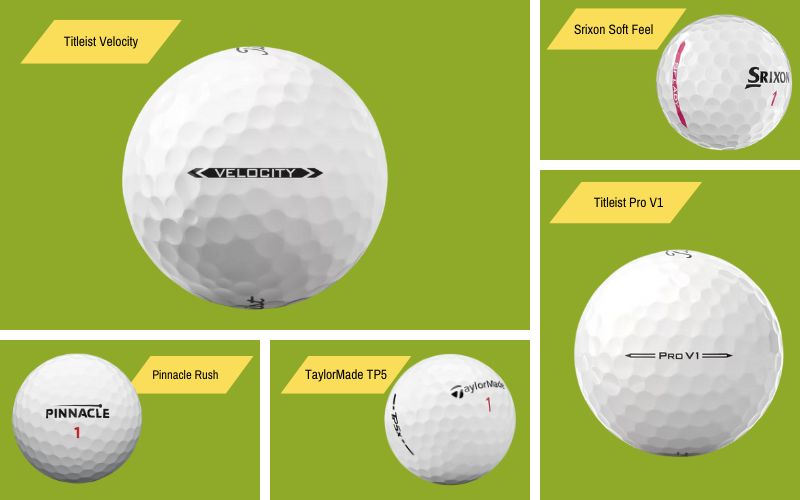
- Titleist Velocity: Titleist built this ball with a massive, high-speed core designed to squeeze out every bit of distance possible, even if you don’t have a fast swing yet. It features a tough cover that resist scuffs, and it is cheap enough that losing a few won’t ruin your day.
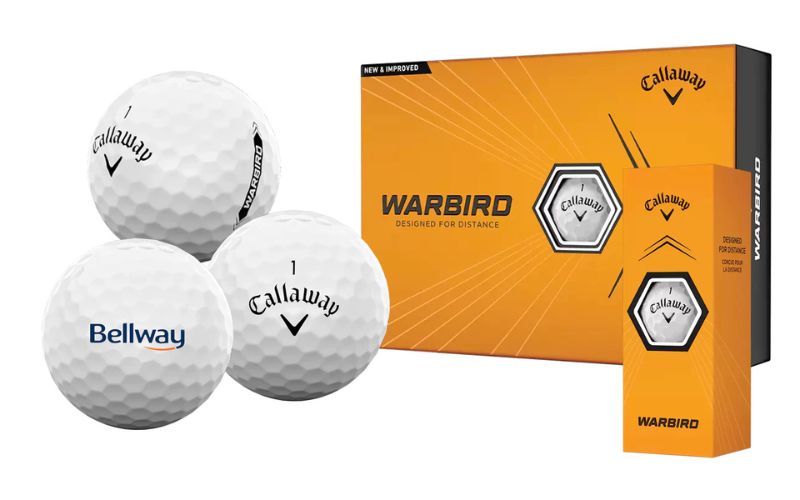
- Callaway Warbird: The Warbird is a classic distance ball known for its firm feel and high-energy core. Callaway uses a specialized dimple pattern to cut down on drag, which helps your tee shots stay airborne a little longer and fly a bit straighter.
- Srixon Soft Feel: If you hate the feeling of hitting a rock, this is your best bet. It features a low-compression design and a softer cover, meaning you get a smooth impact and straighter shots even while you are still figuring out your swing mechanics.
Callaway Warbird
Intermediate Golfers
Once you start making consistent contact, you can transition away from pure distance balls. Mid-handicappers generally look for a functional middle ground, something that still flies far off the tee but gives you enough stopping power on the greens to actually play target golf.
- Bridgestone e6: This is a fantastic option if you are still fighting a bit of a slice or hook. It is specifically engineered to reduce sidespin, which keeps your shots online while the softer core provides a much better feel than a standard beginner ball.
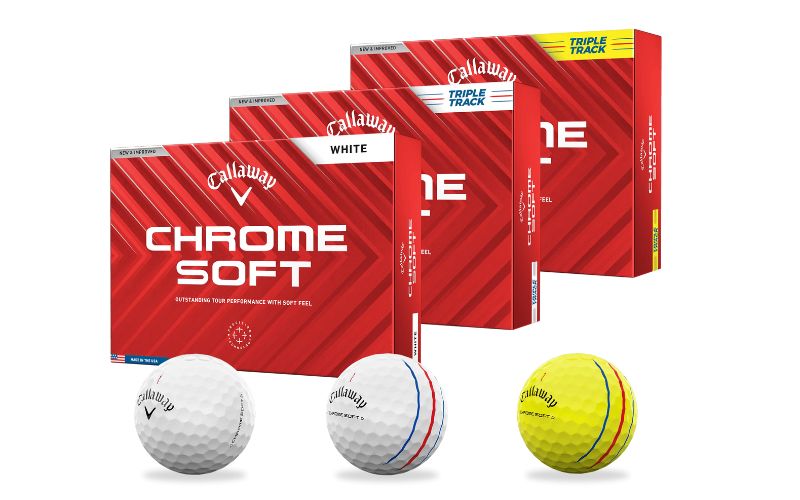
- Callaway Chrome Soft: A step up in performance, the Chrome Soft uses a multi-layer design to give you high ball speeds with your driver while keeping spin rates high on your wedge shots. It gives you a premium tour-style feel without requiring a professional-level swing.
- Titleist Tour Soft: Titleist uses a huge core paired with an incredibly thin cover here. The result is a ball that feels soft off the putter face but still penetrates through the wind with plenty of stability on full swings.
Callaway Chrome Soft
Advanced Golfers
Low-handicappers and scratch players aren’t chasing distance out of a ball; they already have the swing speed for that. Instead, advanced players demand absolute predictability, maximum green-side spin, and the ability to shape shots on demand.
- Titleist Pro V1: The undisputed benchmark for tour-level performance. The Pro V1 gives you an incredibly soft feel and a penetrating, consistent ball flight. Its multi-layer construction ensures that a pure strike reacts exactly the same way every single time.
- TaylorMade TP5: This is the only five-layer ball on the market, using those different tiers like a gear system. The internal layers decouple to give you massive distance on heavy driver impacts, while the outer cover grabs the grooves of your wedges for pinpoint control.
- Callaway Chrome Soft X: Built specifically for players who absolutely rip through the ball. It features a high-compression setup and a firmer feel, giving high-speed players the exact feedback and aggressive greenside spin they need to attack tight pins.
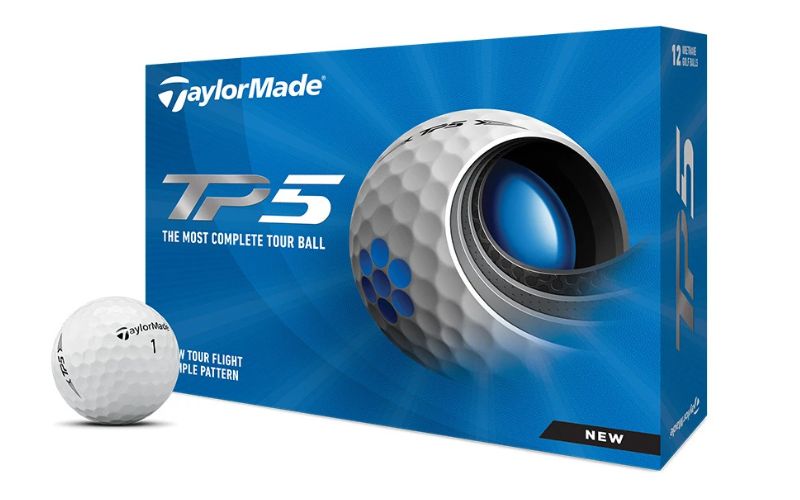
TaylorMade TP5
Budget-conscious Golfers
You don’t need to drop fifty dollars a dozen to get a ball that performs well. If you are a casual player or just want a solid, reliable ball that keeps costs down, these options offer great value.
- Wilson Ultra 500: A straightforward, no-nonsense distance ball. It features a hard cover that lasts forever and a solid core meant to maximize your yards. It is an ideal option for recreational weekend rounds.
- Pinnacle soft: Pinnacle manages to deliver a surprisingly soft feel at a budget price point. It relies on a low-compression core to give you steady, predictable distance and a smooth sensation off the clubhead.
- Top Flite XL Distance: Built with a classic, rugged two-piece construction, this ball is designed entirely around raw distance. It is one of the most affordable options on the rack, making it a staple for anyone who prioritizes their wallet and their yardage over backspin.
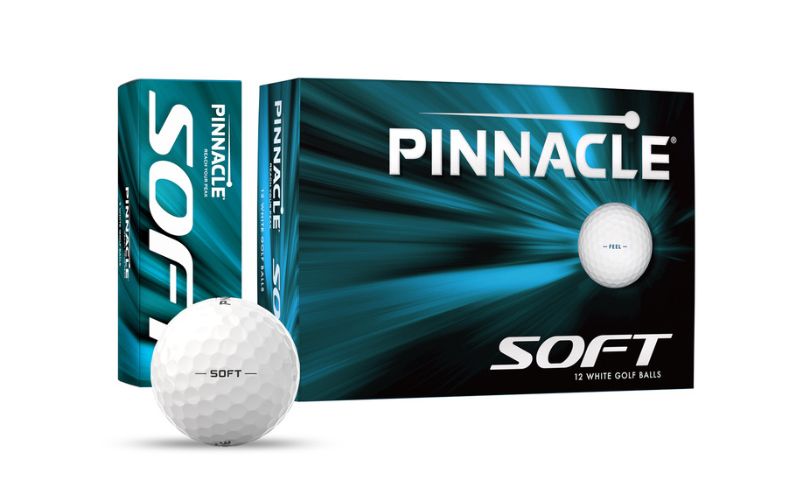
Pinnacle soft
Conclusion
Choosing the perfect golf ball is a long and thrilling journey. Experimenting with different options and identifying what works best for your playing style is key. Whether you’re a beginner looking for forgiveness, an advanced player chasing precision, or a budget-conscious golfer seeking value, there’s a perfect ball for everyone. We hope this guide will help you find the ball that complements your game and help you improve on the course. If you need any further assistance, don’t hesitate to contact us; our dedicated experts are always ready to help you!
Read more:
- Top 15 Best Golf Balls to Buy in 2026
- 9 Best Golf Rangefinders to Master Your Swing with Precision
- Top 8 Best Golf Shot Tracking Apps and Devices (Updating)
FAQs
Should I use the same golf ball throughout an entire round?
Yes, you absolutely should stick to the same exact model for all 18 holes. If you swap between a hard distance ball on one hole and a soft premium ball on the next, your distances will be all over the place, your wedges won’t spin predictably, and your putting speed will be a guessing game. Consistency is everything in golf, and playing the same ball removes a major variable.
How often should I replace my golf balls?
Swap it out the moment you see a deep scuff, a cut in the cover, or any visible crack. Realistically, modern balls are tough and can last a few rounds, but hitting a cart path or trees can deform them. Even a tiny slice in the urethane cover messes up the aerodynamics, causing the ball to drop out of the air early or curve unexpectedly.
How can I test which golf ball is best for me?
The best way is to do an on-course test, starting from the green and working your way back to the tee box. Grab two or three different types, chip and putt with them to see what feel you prefer, and then hit them on approach shots to see how they check up. If you want a quicker answer, booking a launch monitor session with a professional fitter will give you hard data on your exact compression and spin rates.
Can a golf ball help reduce a slice or hook?
A ball won’t fix a bad swing path or an open clubface, but it can take some of the teeth out of a bad miss. If you struggle with a severe curve, switching to a low-spin distance ball will cut down on the lateral sidespin that causes the ball to balloon offline. It won’t cure your slice, but it might keep you in the fairway instead of the hazards.